
How to Hatch Chicken Eggs: Incubator Guide from Day 1 to 21
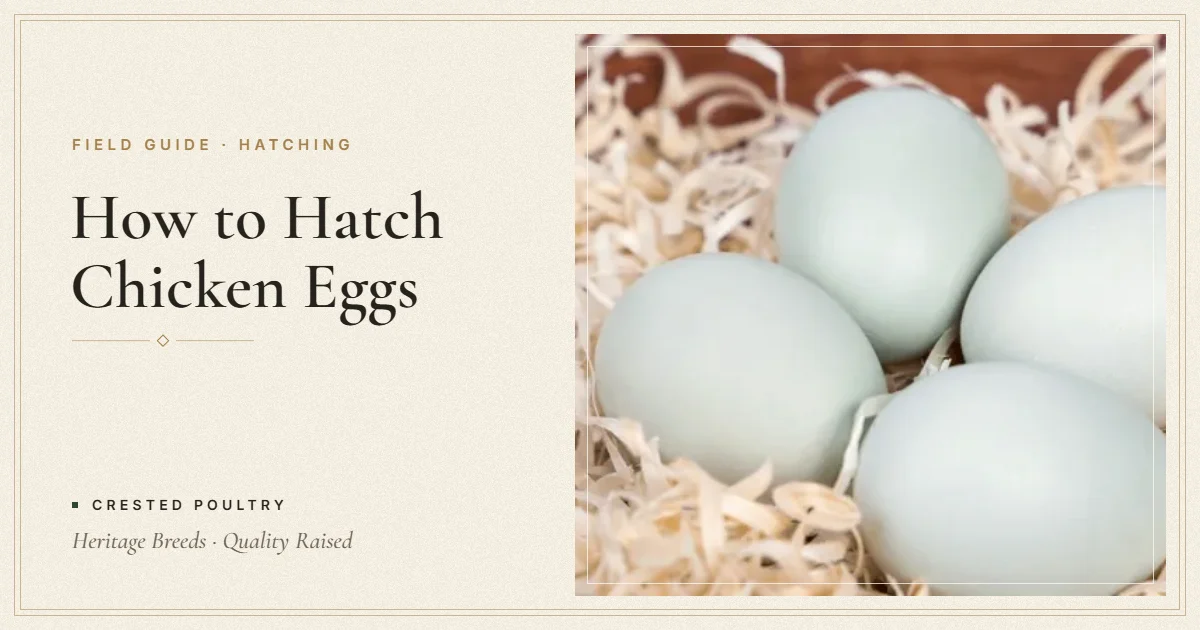
Watching a chick pip through its shell is one of the most rewarding moments in poultry keeping. It is also very achievable at home with a decent incubator and a little patience. This guide explains how to hatch chicken eggs from the day your eggs arrive to the day your chicks move into the brooder: temperatures, humidity, turning, candling and what to do on hatch day. Everything here applies to our fertile hatching eggs, from everyday layers to rare breeds.
What You Need Before You Start
- An incubator, ideally forced-air (with a fan) and an automatic egg turner. Run it for 24 hours before setting eggs to confirm it holds temperature.
- A separate thermometer and hygrometer. Built-in readouts are often off by a degree or two, which matters.
- A candling light to check development.
- Fertile eggs from healthy parent stock.
- A brooder ready before hatch day. See our chicken keeping supplies checklist and our range of poultry supplies.
Step 1: Prepare and Rest Your Eggs
Store hatching eggs pointed end down at a cool room temperature of about 55 to 65°F (13 to 18°C) and set them within seven days of laying for the best results. Do not wash them. The natural bloom on the shell protects against bacteria. Shipped eggs need special care: let them rest pointed end down for 12 to 24 hours so the air cell can settle. Our guide on what to do when hatching eggs arrive explains this in detail.
Step 2: Set the Right Temperature and Humidity
| Stage | Days | Temperature (forced-air) | Humidity | Turning |
|---|---|---|---|---|
| Incubation | 1–18 | 99.5°F (37.5°C) | 40–50% | At least 3–5 times daily |
| Lockdown | 18–21 | 99.5°F (37.5°C) | 65–70% | Stop turning |
In a still-air incubator without a fan, aim for 101 to 102°F measured at the top of the eggs, because warm air layers in the cabinet. Small, steady readings matter more than perfect numbers. Wide swings in temperature cause more failed hatches than being half a degree off.
Step 3: Turn the Eggs
A hen turns her eggs dozens of times a day. Turning stops the developing embryo from sticking to the shell membrane. Automatic turners handle this for you. If you turn by hand, mark one side of each egg with an X and the other with an O in pencil, turn an odd number of times a day so the eggs spend alternate nights on each side, and always wash your hands first.
Step 4: Candle on Day 7 and Day 14
Candling means shining a bright light through the shell in a dark room. On day 7 a fertile egg shows a spider-like web of blood vessels and a dark eye spot. Clear eggs are infertile. An egg with a red ring is an early loss and should be removed. On day 14 the embryo fills most of the egg and you will see movement. Remove any egg that smells or seeps, because it can burst and contaminate the others. Dark-shelled eggs, such as Black Copper Marans and Barnevelder, are harder to candle, so use a strong light.
Step 5: Lockdown on Day 18
On day 18, stop turning, lay the eggs flat, raise the humidity to 65 to 70% and close the lid. Resist opening the incubator from now until hatching finishes. Every opening drops humidity and can shrink-wrap chicks in their membranes.
Step 6: Hatch Day (Day 21)
Chicks usually pip (make the first hole) around day 20, then zip around the shell 12 to 24 hours later. It can be slow, and that is normal. Do not help a chick out unless it has been stuck for a very long time and you have experience. Assisting too early can cause bleeding. Leave newly hatched chicks in the incubator until they are dry and fluffy. They absorb the yolk before hatching and can comfortably go 24 to 48 hours without food or water.
Incubation Times for Other Poultry
| Species | Days to hatch | Notes |
|---|---|---|
| Chicken | 21 | Bantams can hatch a day early |
| Duck | 28 | Higher humidity; Muscovy take about 35 days |
| Quail (Coturnix) | 17–18 | Use quail rails or trays |
| Peafowl | 28–30 | See our peafowl guide |
| Emu | ~50 | Lower temperature (about 97°F) and humidity |
| Ostrich | ~42 | Low humidity and large-egg turning |
Ratite eggs need very different settings from chicken eggs, so follow the specific guidance provided with our emu eggs and ostrich eggs.


Fertile Hatching Eggs


Fertile Hatching Eggs

Fertile Hatching Eggs

Fertile Hatching Eggs

Fertile Hatching Eggs

Fertile Hatching Eggs
Step 7: Move Chicks to the Brooder
Once dry, move chicks to a brooder at 95°F (35°C) under the heat source, with a cooler area to move away to. Dip each beak in water as you set them down. From here, follow our week-by-week baby chick care guide. Hatching ducks instead? Our duckling guide covers their different needs.
Common Hatching Problems
- No development: infertile eggs, eggs stored too long or too warm, or incubator temperature too low.
- Chicks fully formed but not hatching: usually low humidity at lockdown or a temperature drop.
- Early or sticky hatches: temperature running too high or humidity too high in days 1–18.
- Splayed legs after hatch: slippery surfaces. Use paper towel or textured liners in the brooder for the first days.
Frequently Asked Questions
What temperature do you incubate chicken eggs at?
99.5°F (37.5°C) in a forced-air incubator, or 101 to 102°F measured at the top of the eggs in a still-air incubator.
What humidity is needed to hatch chicken eggs?
About 40 to 50% for days 1 to 18, then 65 to 70% from day 18 (lockdown) until hatching is finished.
How long does it take chicken eggs to hatch?
21 days. Bantam eggs can hatch a day early and very large eggs a little late.
When should you stop turning eggs?
Stop turning on day 18, lay the eggs flat, raise the humidity and keep the incubator closed until the chicks hatch.
Choose your next hatch from our fertile hatching eggs, compare breeds in our best egg-laying chickens guide, or read how to buy fertile hatching eggs online.