
Ducklings are hardy, funny and fast-growing, but they are not just chicks with webbed feet. They drink more, mess more, need extra niacin and have to be kept away from deep water until they are feathered. This guide explains how to raise ducklings from day one to the pond: brooder setup, temperatures, feed, water and when they can swim. It applies to every bird in our baby ducks for sale range.
The Duckling Brooder
Ducklings outgrow small boxes in days, so plan a brooder with room to expand. A stock tank, a large dog crate lined with plastic, or a sectioned-off corner of a shed all work.
- Space: about one square foot per duckling at first, rising to three or four square feet by week three.
- Bedding: pine shavings over a waterproof base. Avoid newspaper (too slippery) and cedar (harmful fumes).
- Water station: set the waterer on a wire grid or tray so spilled water drains away from the bedding.
- Heat: a heat plate or securely mounted lamp with a cooler area to move away to.
Temperature Schedule
| Age | Brooder temperature |
|---|---|
| Week 1 | 90°F (32°C) |
| Week 2 | 85°F (29°C) |
| Week 3 | 80°F (27°C) |
| Week 4+ | Reduce gradually; most need no heat by 4–6 weeks in mild weather |
Ducklings feather faster than chicks and generate a lot of body heat as a group, so they usually need heat for a shorter time. Watch them: crowded under the heat means cold, panting and spread out means too warm.
Feeding Ducklings
Feed a waterfowl starter if you can find it. If not, use an unmedicated chick starter and add niacin. Ducklings need far more niacin (vitamin B3) than chicks, and a shortage causes weak, bowed legs. The simplest fix is brewer’s yeast sprinkled on the feed, roughly one tablespoon per cup of crumble. Switch to a grower ration at about three weeks, as fast growth on very high protein can cause wing problems such as angel wing.
Water: Drinking, Not Swimming (Yet)
A duckling’s waterer must be deep enough for it to dip its whole bill and clear its nostrils, but not so deep it can climb in and get soaked. Ducklings do not have working preen oil glands until they feather up, so a mother-less duckling that swims for long can become waterlogged, chilled and drown.
- Weeks 1–2: drinking water only, plus a short, supervised paddle in lukewarm water if you like. Dry them under the heat afterwards.
- Weeks 3–5: longer supervised swims in shallow tubs with an easy exit ramp.
- From about 6–8 weeks: once fully feathered and waterproof, they can use a pond or pool freely.
Duckling Breeds and Their Quirks
Call ducklings
Tiny and loud, Call ducks are ornamental bantams that need a covered run because they can fly. See Call ducklings for sale.
Indian Runner ducklings
Upright, energetic foragers and excellent layers. They rarely fly and are brilliant slug control in gardens. Browse Indian Runner ducklings.
Muscovy ducklings
Quieter than other ducks, Muscovies are strong foragers and good mothers. Their eggs take about 35 days to hatch rather than 28. See Muscovy ducklings.
Golden Cascade ducklings
A dual-purpose breed that lays well and is easy to sex by colour as adults. See Golden Cascade ducklings.
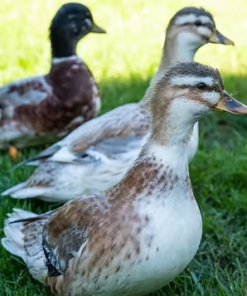
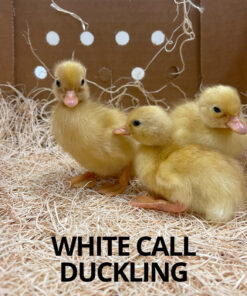
Baby Ducks For Sale
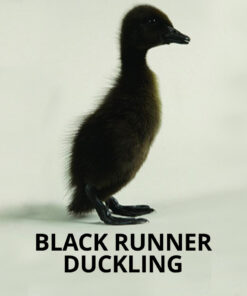
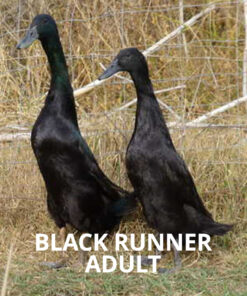
Baby Ducks For Sale
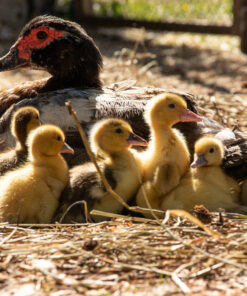
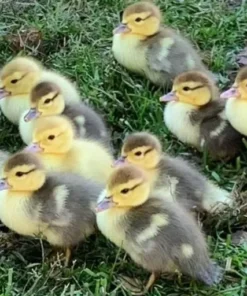
Baby Ducks For Sale
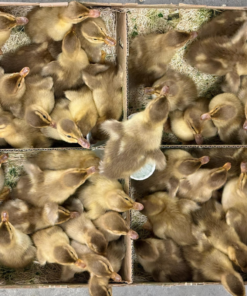
Baby Ducks For Sale
Health Watch
- Leg weakness or wobbling: almost always niacin deficiency. Increase brewer’s yeast immediately.
- Pasty vent: less common than in chicks, but check daily in week one.
- Wet, matted down: chilled ducklings. Dry them and check the waterer is not leaking.
- Angel wing: wing tips that twist outward around 4–6 weeks. Lower the protein and catch it early.
Moving Ducklings Outdoors
From around six weeks, feathered ducklings can move to a secure duck house at night and a fenced run by day. Ducks do not roost or need nest boxes like chickens, but they do need predator-proof housing with plenty of floor space and ventilation. Our guide to keeping backyard ducks explains housing, water and daily care for adults. If you are keeping ducks with chickens, see how to introduce new birds to a flock.
Frequently Asked Questions
What temperature do ducklings need?
About 90°F (32°C) in week one, lowered by about 5°F a week. Most ducklings need little or no heat by four to six weeks in mild weather.
Why do ducklings need niacin?
Ducklings need far more niacin than chicks for strong legs and joints. Add brewer's yeast to their feed, about one tablespoon per cup.
When can ducklings swim?
Short supervised paddles are fine from the first week, but ducklings should not swim freely until fully feathered and waterproof at about six to eight weeks.
Can ducklings eat chick starter?
Yes, unmedicated chick starter with added niacin works if waterfowl starter is not available.
Ready for adult birds? Browse ducks for sale, read how to buy ducklings online, or compare the egg output of Khaki Campbell ducks in our best egg layers guide.